A noisy room can make ordinary work feel tiring. Voices blur together. A chair scrapes across the floor, and the sound seems to linger. Acoustic Wall panels can help control these reflections by absorbing some sound energy, making conversations clearer and rooms more comfortable. They are not magic. They do not block every sound from passing through a wall.
Acoustics researcher Professor Trevor Cox studies how sound behaves in real spaces. A practical takeaway from this field is simple: “Treat the room, not just the noise.” This is an original summary, not a verified quotation from Professor Cox. That distinction matters. Reliable advice should separate published quotes from general acoustic principles.
The right panels depend on the room, the noise source, and the desired result. A small meeting room with hard glass and painted walls may need different treatment from a home office beside a busy hallway. Panel thickness, placement, and coverage all matter. So does the existing construction. A few decorative panels may soften echoes, yet they usually cannot replace insulation or proper sound isolation. That can be disappointing. It is also useful to know before buying.
This guide explains what Acoustic Wall panels can realistically improve, how to assess a space, and which details to check before installation. Look for measured product data, clear specifications, and advice suited to your room. Better sound starts with a careful diagnosis. Not guesswork.
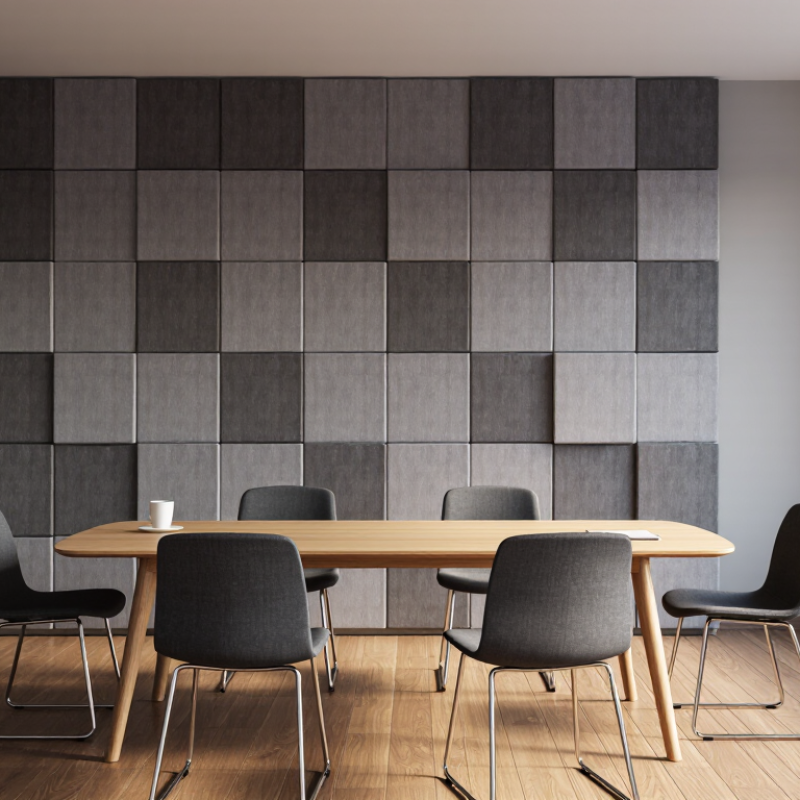
Acoustic wall panels are porous or fibrous absorbers, not simply decorative boards. Their open surfaces let sound waves enter; friction within the material converts some acoustic energy into small amounts of heat. A fabric-covered mineral-fiber panel, for example, may soften reflections from a bare wall and reduce the sharp echo of a hand clap. That distinction matters. Absorption improves a room’s sound, but it does not automatically stop noise passing through walls.
Performance depends on material, thickness, mounting, and frequency. ASTM C423-23 measures sound absorption in a reverberation room; its Noise Reduction Coefficient, or NRC, averages results at 250, 500, 1,000, and 2,000 hertz, then rounds the figure to the nearest 0.05. An NRC of 0.80 describes a strong average absorption rating across those test bands, not an 80 percent reduction in every sound. Low bass may still linger. ISO 354:2003 also specifies reverberation-room methods for measuring absorption, underscoring why comparable test conditions matter.
In practice, placement counts. Panels near a reflective wall beside a speaker or meeting table can reduce flutter echo and make speech easier to follow. Yet covering every surface may leave a room unnaturally dull, while thin panels often do little for deep bass. I’ve seen people treat NRC as a complete soundproofing score; it isn’t. Check tested frequency data, panel thickness, and installation details, then consider the doors, windows, and wall gaps that can still leak sound.
Acoustic wall panels reduce echo by absorbing part of the sound that would otherwise bounce between hard surfaces. Their porous cores let sound enter; friction within the material converts some acoustic energy into heat. The change is easy to notice in a bare room: claps stop ringing as long, and voices feel less harsh. Placement matters. Panels near strong reflection points can help speech clarity, while a few small panels may do little in a large, lively room.
Look for absorption data, not a promise of complete soundproofing. ASTM C423 measures sound absorption in a reverberation room; its Noise Reduction Coefficient averages results at 250, 500, 1,000, and 2,000 hertz. It describes absorption, not how well a wall blocks sound passing through it. For context, ANSI/ASA S12.60 sets a maximum reverberation time of 0.6 seconds for smaller unoccupied classrooms, up to 10,000 cubic feet. That benchmark shows why controlling reflections matters for listening. Still, panels are not magic. Low-frequency rumble can remain, and placement or spacing from the wall may change performance. A room can sound calmer without becoming silent.
Acoustic treatment and soundproofing address different problems. Acoustic wall panels absorb some sound energy bouncing around a room. This can reduce echo and make speech clearer, especially in a bare office with glass, drywall, and a hard floor. The room may feel calmer. But sound can still pass through the wall.
Soundproofing aims to limit sound moving between spaces. It often relies on added mass, sealed gaps around doors and outlets, and sometimes resilient framing or separated layers. A thin decorative panel rarely provides that barrier. If you hear a television next door, panels may improve your room’s tone without stopping the noise. In real rooms, the distinction can feel less tidy.
Tips: Clap near a wall and listen for a lingering echo; panels may help with that. For outside noise, check door seals and possible wall or ceiling gaps before choosing treatment. Measure twice. Panel placement matters, and covering every surface is not always necessary.
Acoustic panels help different rooms in different ways. In a classroom, they absorb reflections from hard floors, windows, and bare walls, making spoken instructions easier to follow. ANSI/ASA S12.60-2010 sets a reverberation-time limit of 0.6 seconds for smaller core learning spaces, alongside a 35 dBA background-noise limit. These figures show why simply adding soft furnishings may not be enough.
In open offices, wall panels can soften echoes around meeting tables and reduce the sharpness of nearby conversations. They do not stop sound passing through walls. That distinction matters when a private call shares a thin partition with a busy team. In restaurants, panels placed near seating can make conversation less tiring over a long meal. A ceiling panel above a crowded table may help, too.
Home studios and media rooms often need targeted treatment near reflective surfaces, not every wall covered. Panels behind speakers or beside a desk can tame flutter echoes and improve listening comfort. Still, placement takes judgment. More material is not automatically better, and a room can feel oddly dull when absorption is excessive. Panels also cannot fix rumbling equipment or poor door seals; those problems need different solutions.
Why Choose Acoustic Wall Panels for Better Soundproofing?
How to Choose and Position Acoustic Wall Panels
Choose panels for the problem you can hear. A sharp clap that lingers points to excess reverberation, while voices passing through a wall need a different solution. Acoustic panels absorb some sound inside a room; they do not, by themselves, block sound from neighboring spaces. Keep that distinction in mind.
Check panel thickness, material, and independent absorption data before buying. A single rating may not describe performance across every frequency, so review the test details when available. For speech-heavy rooms, fabric-wrapped absorbers can reduce harsh reflections. In a small office, panels roughly two to four inches thick may be a practical starting point, but the room and product both matter. Start by listening. Walk around and note where speech sounds especially bright or echoing.
Position panels at reflection points on side walls, often near ear height when seated. A helper can move a small mirror along the wall; mark spots where you can see the speakers from your seat. Add ceiling panels if reflections remain overhead. Leave small gaps between panels rather than covering every surface, and consider an air gap behind thicker panels if the maker’s guidance supports it. The neatest layout is not always the most effective one. Recheck the room after installation using the same clap or spoken phrase, and adjust if needed.
How to choose and position panels: compare representative sound-absorption coefficients by frequency.
Porous panels typically absorb more mid- and high-frequency sound than a hard painted wall, helping reduce reflections and reverberation. Values shown are representative examples, not a guarantee for a specific product; test results vary with panel construction, mounting, and room conditions. Acoustic panels improve room acoustics but do not replace sound-isolating construction. For placement, start at reflection points on side walls and behind the listening position; choose thicker panels or an air gap when more low-frequency absorption is needed.
Their porous cores let sound enter. Friction inside the material turns some acoustic energy into heat, reducing reflections.
No. They absorb some sound within a room but do not, by themselves, block sound passing through a wall. Not silence.
Clap once and listen for a lingering ring. Voices that sound harsh or bright can also point to strong reflections.
Look for independent test data and review its frequency details. A single rating may not show performance across every sound range.
Panels around two to four inches thick can be a practical starting point. The room and panel material still matter.
Try reflection points on side walls, often near seated ear height. A small mirror can help locate spots where speakers appear from your seat.
Usually not. Leave some space between panels, and consider an air gap behind thicker panels if the installation guidance supports it.
Repeat the same clap or spoken phrase after installation, then adjust the panels if needed. I might expect a dramatic change, but often the room simply feels less sharp.
Acoustic Wall panels are designed to improve how a room sounds by absorbing some of the sound energy that would otherwise bounce off hard surfaces. Their porous or layered construction helps reduce reflections and echo, making speech and music clearer and the space more comfortable to use. They are useful in settings such as offices, classrooms, home studios, meeting rooms, and living spaces, though the best panel type and amount depend on the room’s size, surfaces, and activities.
Acoustic treatment is not the same as soundproofing: panels can improve sound inside a room, but they do not usually block noise from entering or leaving it. For effective results, choose panels suited to your needs and place them where reflections are strongest, such as on walls opposite sound sources or near common listening areas. Thoughtful positioning can create a more balanced acoustic environment without requiring major changes to the room.

Rich New Materials