Choosing the best Spc Flooring begins with the project, not a product brochure. Each room presents different demands. A busy hallway needs strong wear resistance. A basement needs careful moisture planning. A retail floor may require thicker protection and easier maintenance. These details shape the right specification.
Dean Thompson, a recognized resilient-flooring industry expert and former RFCI president, offers a useful principle: “Performance starts with understanding the application.” That idea deserves attention. Spc Flooring can resist impacts, stains, and everyday moisture, but no floor performs perfectly in every setting. Product claims still require practical judgment.
This guide examines the choices that matter before installation. We will compare wear layers, core thickness, plank dimensions, locking systems, underlayment, and surface texture. We will also consider subfloor flatness, room temperature, sunlight, and expected foot traffic. A sample plank can reveal more than a polished image. Feel its texture. Check the click connection. Place it near a window and observe the color.
Budget matters, but the lowest price may create expensive compromises. A thin wear layer may show scratches sooner. A rigid core may feel unforgiving over an uneven subfloor. Installation can also expose weaknesses that product pages overlook. That part is easy to underestimate.
The goal is not to find one universal winner. It is to identify the Spc Flooring that fits your space, maintenance habits, installation conditions, and realistic expectations. Some decisions may remain uncertain. That is normal. Careful comparison is still better than confident guessing.
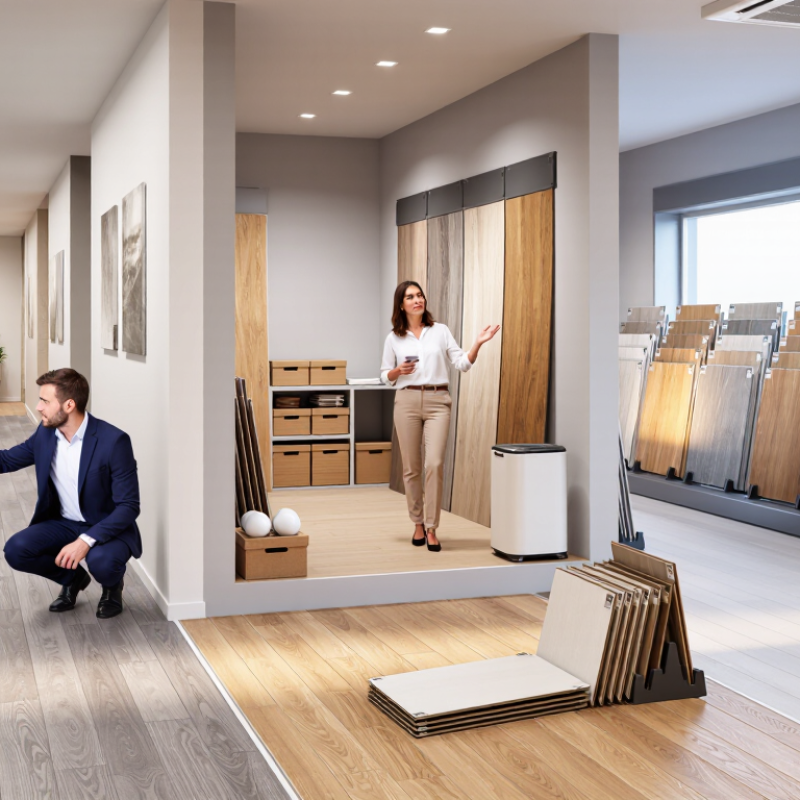
Before choosing SPC flooring, define how the room will actually be used. A quiet bedroom has different demands from a busy hallway or retail entrance. List expected foot traffic, furniture weight, cleaning frequency, and exposure to water. Include pets, children, rolling chairs, and dropped objects. Small details can change the specification.
Inspect the subfloor carefully. It should be clean, dry, firm, and reasonably level. Moisture testing matters, especially over concrete or near ground-level rooms. SPC flooring resists surface water, but it does not repair a damp subfloor. Measure the room, door clearances, and expansion gaps around walls. A few millimeters can affect the entire installation. I have seen attractive projects fail because the existing floor was assumed to be flat.
Comfort also deserves attention. Rigid flooring can feel hard underfoot and may transmit sound without suitable underlayment. Compare acoustic needs, thermal conditions, and the intended installation method. Check the wear layer, locking system, slip resistance, fire performance, and care requirements against applicable local standards. Do not select the thickest option automatically; thickness alone does not guarantee better performance. In one renovation, a lower-profile product worked better because it preserved door movement and reduced transition problems. That choice was practical, though not visually perfect. Review the installation instructions before ordering, and confirm that the selected flooring suits the room’s moisture and traffic conditions.
Compare the SPC core, wear layer, and surface before judging appearance.
A 5–6.5 mm rigid core can improve dimensional stability, but thickness alone does not prove quality. ASTM F3261-22 evaluates rigid PVC-core flooring through attributes such as thickness, dimensional stability, and indentation resistance. Check the test results, not only the product description. A thicker core may still fail if the locking profile is weak or the subfloor is uneven.
Wear layers are commonly listed as 12, 20, or 30 mil. One mil equals 0.001 inch. For bedrooms, 12–20 mil may suit moderate traffic; busy corridors often justify 20–30 mil. These figures are useful, but they are not the whole story. Ask for abrasion, stain, indentation, and warranty test data. A high mil rating cannot repair poor installation.
Surface specifications deserve equal attention. Embossed textures can hide light scratches and improve visual realism, while deep grooves may collect grit near entrances. Confirm gloss level, slip-resistance test method, and cleaning limits. EPA guidance reports indoor pollutant levels can be two to five times outdoor levels, sometimes much higher, so request verified VOC-emission documentation. FloorScore or equivalent testing can add confidence. I would not choose purely by thickness; that shortcut is convenient, and sometimes wrong. Surface feel, core stability, and measured performance should agree.
Choosing the best SPC flooring starts below the surface. Installation method and subfloor condition often matter more than plank appearance. A 2024 Grand View Research analysis projects strong growth for resilient flooring, driven partly by faster installation and renovation demand. That convenience can mislead buyers.
For floating installation, the subfloor must be clean, dry, stable, and nearly level. Use a straightedge across the surface. Many installation guides allow no more than 3/16 inch variation over 10 feet, but always verify the product specification. Concrete needs moisture testing, not guesswork. ASTM F2170 identifies in-situ relative humidity testing as a standard method; excessive moisture may cause gaps, movement, or microbial problems beneath the floor. SPC is water-resistant, not a waterproof building system.
Click-lock flooring suits many residential projects because it installs quickly without permanent adhesive. Glue-down installation can provide better dimensional control in large rooms, busy corridors, or areas with rolling loads. However, adhesive requires a compatible, properly prepared substrate. Existing tile may work if firmly bonded and sufficiently flat. Soft underlayment, loose boards, and dusty concrete should be corrected first.
Small details matter. Leave the specified expansion gap around walls, cabinets, and pipes. Acclimate materials when required. I once underestimated a doorway transition; the floor looked correct until seasonal movement exposed the mistake. That was avoidable. Check moisture readings, subfloor tolerance, room temperature, and transition heights before cutting the first plank.
Choosing SPC flooring should begin with how the room will be used. A busy hallway needs a stable surface and dependable slip resistance. A bathroom needs textured protection around wet areas. For homes with children or older adults, check wear layers, edge strength, and underfoot comfort. I have seen attractive floors fail because installers ignored subfloor moisture and unevenness. Design matters, but performance matters longer.
Environmental performance requires more than a recycled-content claim. Ask for clear product data, independent laboratory reports, and verified indoor-air emission testing. Look for low-emission materials, responsible manufacturing information, and packaging with less unnecessary plastic. Check whether the flooring can be removed without damaging the subfloor. Disposal is often overlooked. That gap deserves attention.
Safety documents should match your project’s location and use. Review slip-resistance results, fire-performance information, and installation requirements with a qualified professional. Do not rely only on showroom samples. Request a full-size panel and inspect it under daylight. The color may change near windows. The texture may hold dirt in a commercial entry. No floor is perfect. A careful decision weighs design appeal, daily safety, environmental evidence, and the limits of the available documentation.
How to Choose the Best SPC Flooring for Your Project
Verify the product before comparing prices. Request a physical sample, technical sheet, and test documentation from the supplier. Examine the surface under bright light for uneven printing, weak edges, or visible texture defects. Check the wear layer thickness, core density, dimensional stability, and click-joint accuracy. A dense core should feel firm, not hollow, when tapped. Measure several planks from different cartons. Small variations may reveal inconsistent production. Look closely.
Review the warranty in writing. Confirm whether it covers residential or commercial use, fading, stains, locking failure, and surface wear. Check its duration and any required installation conditions. Many warranties exclude moisture damage, poor subfloor preparation, or missing expansion gaps. Keep invoices, batch numbers, installation photos, and maintenance records. These details can protect your claim later. Ask questions. A warranty sounds valuable until its exclusions become clear.
Calculate the total project cost, not only the price per square meter. Include delivery, subfloor leveling, moisture testing, underlayment, trims, transitions, labor, waste, and future repairs. Add extra material for cutting and color matching. Around five to ten percent waste is common, but complex layouts may require more. Compare quotations using the same scope of work. The lowest quote may hide preparation costs. I have seen budgets fail because floor removal was ignored. That mistake is avoidable, although accurate estimates still require site inspection. Confirm lead times and storage conditions before ordering.
| SPC Flooring Specification | Typical Thickness | Wear Layer | Quality Verification Checklist | Suitable Applications | Typical Warranty Structure | Estimated Material Cost | Estimated Total Installed Cost | Key Cost and Risk Considerations |
|---|---|---|---|---|---|---|---|---|
| Economy Residential SPC Budget-focused | 4.0–4.5 mm | 12 mil (approximately 0.30 mm) |
Confirm product thickness with calipers; inspect locking edges for chips; check that planks lie flat and that the core has no visible voids. | Bedrooms, low-traffic living areas, rental refresh projects, and small residential spaces. | Commonly limited residential coverage, often around 10–20 years. Confirm exclusions for moisture, subfloor movement, installation errors, and commercial use. |
Approximately $1.50–$2.50/ft² |
Approximately $3.50–$6.50/ft² |
Lower purchase price, but thinner boards may offer less acoustic performance, impact resistance, and tolerance for minor subfloor irregularities. |
| Standard Residential SPC Balanced choice | 5.0–5.5 mm | 20 mil (approximately 0.50 mm) |
Request a technical data sheet; verify wear-layer thickness, dimensional tolerances, locking-system test information, and moisture-related installation requirements. | Kitchens, hallways, family rooms, bathrooms, and typical owner-occupied homes. | Often includes a longer residential warranty, commonly around 20–30 years. Wear, fading, water exposure, and installation conditions may be subject to separate limits. |
Approximately $2.00–$3.50/ft² |
Approximately $4.50–$8.00/ft² |
Usually offers a practical balance between durability and price. Include transition profiles, waste, delivery, and subfloor preparation in the budget. |
| Premium Residential SPC High-comfort option | 6.0–7.0 mm | 20–30 mil (approximately 0.50–0.75 mm) |
Check the core density, attached-pad specification, acoustic test results, surface embossing, color consistency, and carton batch information. | Large homes, open-plan areas, high-traffic households, renovation projects, and spaces where sound reduction is important. | Residential coverage may be around 25–30 years, subject to product-specific terms. A separate commercial warranty may be shorter or unavailable. |
Approximately $3.00–$5.00/ft² |
Approximately $6.00–$10.00/ft² |
The added thickness can improve feel and acoustic comfort, but it does not replace proper subfloor leveling or moisture testing. |
| Light Commercial SPC Moderate traffic | 5.0–6.5 mm | 20–30 mil (approximately 0.50–0.75 mm) |
Verify commercial-use approval, slip-resistance information, fire-test classification, dimensional stability, rolling-load performance, and cleaning requirements. | Offices, boutique retail spaces, small hospitality areas, waiting rooms, and low-to-moderate commercial traffic zones. | Commercial warranties are commonly shorter than residential warranties, often around 5–15 years. Confirm traffic classification and maintenance obligations. |
Approximately $3.00–$5.50/ft² |
Approximately $6.50–$11.00/ft² |
Review downtime, furniture movement, replacement-plank availability, and whether the warranty requires professional installation or approved accessories. |
| Heavy Commercial SPC Demanding environments | 6.0–8.0 mm | 30–40 mil (approximately 0.75–1.00 mm) |
Obtain independent or accredited test reports for abrasion, fire performance, slip resistance, dimensional stability, stain resistance, and acoustic properties. | Busy retail areas, education facilities, healthcare support areas, corridors, and other demanding interior applications approved by the product specification. | Commercial coverage may be around 10–20 years, but the exact term depends on traffic level, maintenance, installation method, and use classification. |
Approximately $4.00–$7.00/ft² |
Approximately $8.00–$14.00/ft² |
Higher upfront cost may reduce replacement frequency. Confirm lead times, color-lot consistency, spare-stock requirements, and repair procedures before ordering. |
Cost note: The cost ranges are general U.S. market planning estimates in USD per square foot and may vary by region, project size, flooring layout, labor rates, shipping, taxes, waste, demolition, moisture mitigation, leveling, trims, and installation method. Add approximately 5–10% material waste for straightforward layouts and more for complex patterns. Always obtain a written quotation and review the complete warranty document before purchase.
Inspect the subfloor before choosing planks. It must be clean, dry, stable, and nearly level. Use a straightedge across the surface. Many guides allow about 3/16 inch variation over 10 feet. Verify the specific product limit. Concrete requires moisture testing. Guesswork can cause gaps, movement, or hidden microbial problems.
Floating installation suits many residential rooms because it avoids permanent adhesive. However, the subfloor still needs proper preparation. Leave the required expansion gap around walls, cabinets, and pipes. Soft underlayment, loose boards, and dusty concrete need correction. Fast installation is not the same as easy installation.
Glue-down flooring can improve dimensional control in large rooms and busy corridors. It may also suit areas with rolling loads. The adhesive must match the flooring and substrate. The surface must be firm, clean, and properly prepared. A dusty floor can weaken the bond.
Existing tile may work when it is firmly bonded and sufficiently flat. Check grout lines, loose sections, moisture, and height changes. A doorway transition can become a problem later. I once missed one. Seasonal movement exposed the mistake. Measure transition heights before cutting planks.
Match the floor to daily use. Busy hallways need stable surfaces and dependable slip resistance. Bathrooms benefit from texture near wet areas. Homes with children or older adults need attention to wear layers and edge strength. Underfoot comfort also matters. Attractive flooring can still perform poorly.
Ask for clear product data and independent laboratory reports. Check indoor-air emission testing and manufacturing information. Review recycled-content claims carefully. Also ask about packaging waste and removal methods. Flooring that cannot be removed cleanly may damage the subfloor. Disposal deserves attention.
Request a physical sample, technical sheet, and test documents. Examine the surface under bright light. Look for uneven printing, weak edges, and texture defects. Tap the core. It should feel firm, not hollow. Measure planks from different cartons. Small differences may indicate inconsistent production.
Read the warranty conditions and exclusions. Confirm coverage for residential or commercial use, fading, stains, joint failure, and surface wear. Check the required installation conditions. Moisture damage and missing expansion gaps are often excluded. Keep invoices, batch numbers, photos, and maintenance records. A warranty may sound strong until exclusions appear.
Include delivery, leveling, moisture testing, underlayment, trims, transitions, labor, waste, and future repairs. Add material for cutting and color matching. Five to ten percent waste is common, but complex layouts may need more. Compare quotations with identical work scopes. The cheapest quote may omit preparation. Site inspection still matters.
Choosing the best Spc Flooring begins with clearly defining your project’s needs, including room function, traffic levels, moisture exposure, comfort, and expected service life. Compare the flooring’s core structure, wear layer thickness, surface finish, and dimensional stability to ensure the product can withstand daily use. Installation should also be considered carefully: review click-lock or glue-down options, confirm subfloor flatness and dryness, and check whether the flooring is suitable for concrete, wood, or other approved surfaces.
Next, evaluate available colors, patterns, textures, slip resistance, acoustic performance, and environmental characteristics to balance appearance with practical safety. Before making a final decision, verify manufacturing quality, testing information, warranty terms, maintenance requirements, and coverage limitations. A reliable choice should provide consistent performance and clear installation guidance. Finally, calculate the total project cost, including materials, underlayment, preparation, labor, waste, and future maintenance, so the selected Spc Flooring delivers lasting value rather than only a low initial price.

Rich New Materials