Choosing the best Acoustic Panel begins with understanding the room, not copying another space. A panel that works in a recording studio may disappoint in a bright kitchen or busy office. Room size, wall surfaces, ceiling height, and daily activities all influence acoustic performance. In a home office, hard floors and bare windows can create sharp echoes during video calls. In a classroom, speech clarity matters more than dramatic bass control. Small details matter.
Practical evaluation should combine measurements with careful listening. Measure the room and note glass, concrete, wood, and fabric surfaces. Then clap, speak, or play familiar music from several positions. Listen for fluttering echoes, muffled speech, and uneven volume. Check the panel’s absorption ratings, especially its Noise Reduction Coefficient and performance across different frequencies. These figures provide useful guidance, but they do not tell the whole story. Installation distance from the wall can change low-frequency absorption. Placement can matter more than decoration.
Experience also teaches restraint. More panels do not always create a better room. Excessive absorption may make conversations feel unnaturally dull. I have seen attractive installations that improved appearance but left echoes near the ceiling. That mistake is easy to repeat. Consider panel thickness, density, fire-safety documentation, mounting strength, and maintenance needs. Choose materials from transparent manufacturers with tested specifications. If possible, test one panel before ordering many. No choice is perfect. The most reliable solution balances measurable performance, personal comfort, budget, and the room’s real purpose.
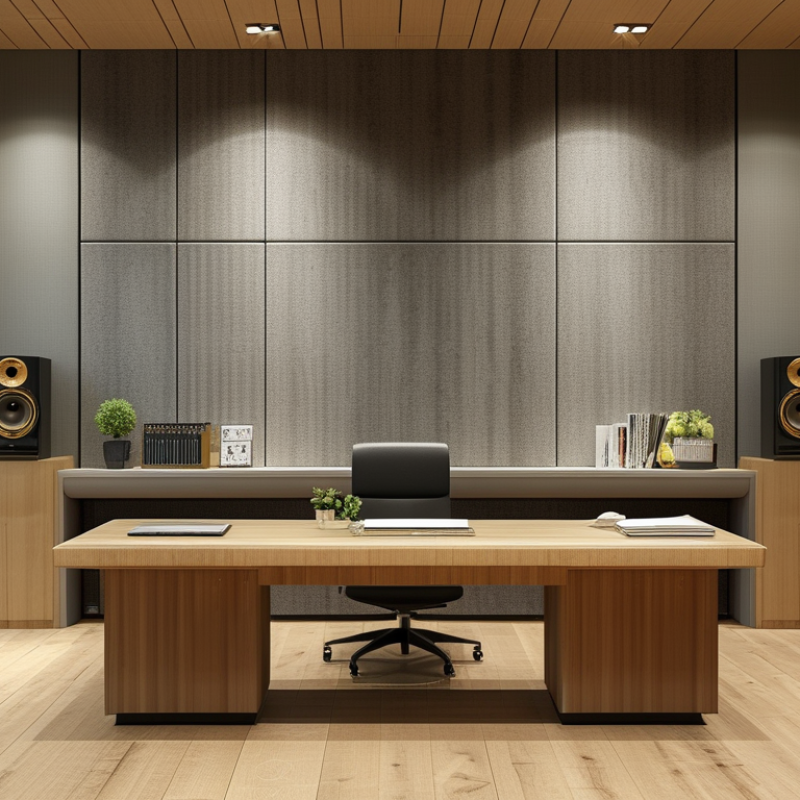
Choosing an acoustic panel begins with defining the room’s real purpose. A home office needs clear speech during calls, while a music room may require controlled reflections and balanced bass. A podcast space has different demands from a classroom or open studio. Write down the main problem before selecting materials.
Walk through the room and listen carefully. Do voices sound harsh near bare walls? Does music become muddy in corners? A sharp hand clap can reveal flutter echoes, but it cannot replace proper measurement. Note the room’s dimensions, ceiling height, windows, doors, and hard surfaces. A measurement microphone can identify troublesome frequencies more accurately. Small rooms often need low-frequency control, not only thin wall panels.
Panel thickness and placement should match the problem. Absorbers near first-reflection points can improve speech clarity and reduce distracting echoes. Thicker panels with an air gap usually absorb lower frequencies more effectively. Corner treatment may help with bass buildup. I once placed panels symmetrically and expected a major improvement, but the room still sounded dull. The issue was excessive absorption on one wall. That experience changed my approach: treat reflections, preserve some liveliness, and test after each adjustment. A practical setup may include panels beside the listening position, overhead, and behind the main sound source. Do not cover every hard surface. Some rooms need more restraint.
Choosing an acoustic panel starts with the room’s actual problem, not its appearance. Hard walls, glass, and bare floors create sharp reflections and lingering speech. Fiberglass, mineral wool, and dense recycled-fiber panels usually absorb sound effectively. Foam can reduce some high-frequency reflections, but it may leave voices and low tones uncontrolled. Material thickness matters too. A thin panel cannot solve every acoustic issue.
Design affects performance and placement. Fabric-wrapped panels suit offices, studios, and meeting rooms because they combine absorption with a clean surface. Slatted or perforated panels can scatter sound while absorbing selected frequencies. Check the Noise Reduction Coefficient, or NRC, but do not treat it as a complete answer. NRC mainly represents mid-range absorption. Ask for test data across different frequencies when possible. In my own room tests, panels placed at first-reflection points improved speech clarity more than panels grouped behind furniture. That result was useful, but not perfect.
Tips: Measure the room before buying. Tap your hands near walls and listen for fluttering echoes. Choose thicker panels for lower-frequency control. Leave a small air gap behind panels when the design allows it. Verify fire-safety documentation and installation instructions. Avoid covering every surface; a room can become unnaturally dull. A balanced room often sounds better than the quietest room.
Compare common sound-absorbing panel options by material, construction, thickness, acoustic performance, and recommended application. The listed NRC values are representative ranges for correctly installed panels and should be verified with project-specific laboratory test data.
| Panel Type | Primary Material | Typical Design | Common Thickness | Representative NRC Range | Best-Suited Spaces | Key Advantages | Important Considerations |
|---|---|---|---|---|---|---|---|
| PET Felt Panel | Recycled or virgin polyethylene terephthalate fiber | Flat, shaped, grooved, or 3D geometric panels | 12–24 mm | 0.45–0.85 | Open offices, classrooms, meeting rooms, corridors, and creative interiors | Lightweight, easy to fabricate, available in many colors, and resistant to fiber shedding | Thin panels mainly control mid and high frequencies; thicker or spaced installations improve low-frequency absorption |
| Fabric-Wrapped Fiberglass Panel | Fiberglass or glass-fiber board with an acoustically transparent fabric facing | Flat wall panel, ceiling cloud, or suspended baffle | 25–50 mm | 0.80–1.10 | Studios, conference rooms, lecture rooms, offices, and auditoriums | High absorption across a broad frequency range and efficient use of wall or ceiling area | Fabric selection affects durability, cleanability, appearance, and fire performance; NRC can exceed 1.00 under standardized testing |
| Mineral Wool Panel | Rock wool or slag wool acoustic board, usually covered with fabric | Rigid framed panel, wall cloud, or hanging baffle | 25–100 mm | 0.85–1.15 | Music rooms, cinemas, industrial spaces, classrooms, and high-noise interiors | Excellent broadband absorption, strong fire-resistance potential, and good performance at lower frequencies when thick | Requires a durable facing and careful edge protection; product density and mounting method substantially affect results |
| Wood Slat Acoustic Panel | Wood veneer or solid wood slats over an absorptive felt or mineral-fiber backing | Regular slats with open gaps over an acoustic backing layer | 20–50 mm | 0.55–0.95 | Restaurants, offices, hospitality areas, libraries, and residential interiors | Combines visual warmth, partial sound diffusion, and absorption behind the slats | Acoustic performance depends strongly on slat spacing, backing thickness, open area, and whether the panel is installed with an air gap |
| Perforated Wood Panel | Perforated plywood, MDF, or wood-fiber board with an absorptive backing | Regular perforations, micro-perforations, or linear slots | 16–40 mm | 0.45–0.90 | Auditoriums, halls, classrooms, offices, and architectural feature walls | Durable decorative surface with controlled reflection and absorption behind the perforated face | Perforation ratio, hole or slot geometry, cavity depth, and backing material determine the frequency response |
| Acoustic Foam Panel | Open-cell polyurethane or melamine foam | Wedge, pyramid, egg-crate, or contoured surface | 25–75 mm | 0.40–0.90 | Broadcast rooms, vocal booths, podcast rooms, and equipment enclosures | Low weight, simple installation, and effective control of mid and high frequencies | Thin foam is generally weak at low frequencies; verify fire, smoke, UV, and aging properties before use in occupied buildings |
| Acoustic Ceiling Cloud | Fiberglass, mineral wool, PET felt, or composite absorptive core | Horizontal panel suspended below the ceiling with an air gap | 25–100 mm | 0.80–1.20 | Open-plan offices, cafeterias, classrooms, atriums, and multipurpose rooms | Uses both panel faces and the ceiling air gap to increase effective absorption area | Suspension height, exposed edges, panel orientation, and ceiling reflectivity influence the overall room result |
| Acoustic Baffle | Vertical fiberglass, mineral wool, PET felt, or perforated composite core | Vertically suspended elements arranged in rows or clusters | 25–100 mm | 0.75–1.15 | Large open spaces, sports facilities, warehouses, cafeterias, and high-ceiling rooms | Provides substantial absorption where wall space is limited and can reduce reverberation in large volumes | Spacing, orientation, quantity, and clearance from walls or ceilings are critical to performance and maintenance access |
A panel that works in a large studio may fail in a small office.
Your room’s size, shape, and purpose should guide every placement decision.
In a compact room, use thinner panels on early-reflection points beside the desk. They reduce harsh echoes without making the space feel unnaturally dead.
Leave some wall area uncovered.
Parallel walls can create flutter echoes, especially in narrow rectangular rooms. Place panels at ear height on opposing walls, then check the ceiling above the listening position.
Corners often need thicker absorption because low frequencies collect there.
In irregular rooms, avoid copying a standard layout blindly. Walk around and clap. Listen for ringing.
A recording room needs controlled reflections, while a meeting room needs clear speech and moderate absorption. A home theater may require stronger treatment behind the speakers and at side-wall reflection points.
Measure before buying.
A simple frequency test and careful listening can reveal problems that visual symmetry misses.
I once placed too many panels behind the desk. The room became quiet but strangely flat.
Moving two panels to the side walls restored useful detail. That mistake still matters.
Acoustic treatment is not only about adding absorption; it is about placing the right amount in the right locations. Check your room again after rearranging furniture, because a sofa, bookshelf, or empty floor can change the result.
Choosing the best acoustic panel starts with the room, not the product photograph. In meeting rooms, I measure echo after normal speech and hand claps. A qualified acoustician can confirm results through reverberation-time testing. Simple listening still reveals harsh reflections near glass walls. Panel placement matters more than covering every surface.
For rented spaces, removable clips or suspended systems avoid permanent damage. Adhesive mounting looks clean, but removal may mark painted walls. Mechanical fixings take longer, yet they provide dependable support on uneven surfaces.
Maintenance should match the room’s traffic and dust levels. Fabric-faced panels need gentle vacuuming with a soft brush attachment. Avoid soaking them. Trapped moisture can stain backing materials.
In busy corridors, choose durable, cleanable surfaces and inspect edges monthly. Suspended panels collect dust on their upper faces, which people often miss. Replace damaged sections instead of ignoring loose corners. That small defect can spread.
Visual preference is not merely decoration. Color, texture, thickness, and spacing change how large a room feels. Soft gray can calm a bright office, while strong color may energize a creative studio.
Wood-look surfaces add warmth, but perforation patterns can limit cleaning options. I once favored a bold geometric layout and later found it distracting during video calls.
That mistake changed my approach: test full-size samples under actual lighting. View them from seated and standing positions. Check installation instructions and fire-performance documentation before purchase. Keep cleaning and repair records, even if the process feels unnecessary.
Choosing an acoustic panel starts with the problem, not the product. Measure the room’s reverberation, speech clarity, and noise sources before comparing prices. The World Health Organization’s Environmental Noise Guidelines (2018) recommend indoor classroom noise below 35 dB(A) during teaching. That target is demanding. A decorative panel alone may not achieve it.
Budget decisions should include installation, maintenance, and replacement risk. Ask for tested absorption data under ISO 354 or ASTM C423. The Noise Reduction Coefficient, or NRC, averages absorption at 250, 500, 1,000, and 2,000 Hz. It helps comparison, but it can hide poor low-frequency performance. Check the full frequency chart. A panel with NRC 0.80 may still feel weak beside a ventilation unit or heavy footsteps.
Quality also includes edge stability, surface cleanability, fire classification, and resistance to sagging. Request independent laboratory reports, not only marketing figures. In offices, fabric can collect dust around seams. In humid rooms, some cores may lose shape. Long-term performance needs inspection intervals and replaceable components. The WELL Building Standard emphasizes measured acoustic conditions, yet real spaces rarely behave like test rooms. Reflections from glass, desks, and concrete can undermine a carefully selected panel. That is where many specifications fail.
: Measure echo after normal speech and hand claps. Notice harsh reflections near glass walls. A professional reverberation test gives stronger evidence.
Not always. Panel placement often matters more than total coverage. Target reflective areas near glass, concrete, and hard ceilings.
Removable clips or suspended systems reduce permanent damage. Adhesive mounting looks clean but may mark painted walls. Mechanical fixings take longer and support uneven surfaces better.
Vacuum gently with a soft brush attachment. Avoid soaking the fabric. Moisture may stain the backing. Suspended panels need cleaning on their upper faces, too.
Inspect edges monthly in corridors and shared spaces. Choose durable, cleanable surfaces. Replace damaged sections instead of ignoring loose corners.
Color, texture, thickness, and spacing change the room’s perceived size. Soft gray can calm bright offices. Strong colors may energize creative spaces.
Yes. View full-size samples under actual lighting. Check them from seated and standing positions. I once chose a bold pattern that distracted me during video calls.
Review absorption across different frequencies, not one rating alone. Check edge stability, cleanability, fire-performance documents, and resistance to sagging.
Include installation, cleaning, inspections, and possible replacement. A lower purchase price may create higher long-term costs. This method is useful, but never perfect.
No. A decorative panel may not control ventilation noise or heavy footsteps. Glass, desks, and concrete can weaken expected results. Measure the room again after installation.
Choosing the best Acoustic Panel begins with understanding your room’s specific sound challenges and treatment goals. Consider whether you need to reduce echoes, improve speech clarity, control music reflections, or create a more balanced listening environment. Next, compare panel materials, surface designs, thicknesses, and sound absorption ratings to determine which option suits your needs. The panel’s performance should match the room’s size, shape, ceiling height, and primary function.
Placement is equally important, so identify reflection points and areas where sound tends to build up before installation. Review available mounting methods, maintenance requirements, and visual styles to ensure the panels are practical and compatible with your interior. Finally, evaluate the total cost alongside product quality, durability, and expected long-term performance. A carefully selected Acoustic Panel should provide effective sound control, remain easy to maintain, and offer lasting value without compromising the room’s appearance or purpose.

Rich New Materials