Acoustic Absorption Panels can make a room easier to hear, speak, and work in. They reduce reflected sound, helping limit the sharp echoes that blur conversation in meeting rooms, classrooms, and restaurants. The need is measurable. ANSI/ASA S12.60-2010/Part 1 (R2020), a classroom acoustics standard, sets a reverberation-time limit of 0.6 seconds for certain core learning spaces up to 10,000 cubic feet. It also specifies a 35 dBA background-noise limit. These are classroom benchmarks, not universal targets for every room. Still, they show why room acoustics deserve attention alongside lighting and layout.
Sound consultant Julian Treasure has said, “We are losing our listening,” in his TED talk on listening. His remark is not a technical claim about panels, but it points to a real design challenge: noisy, echoing spaces make careful listening harder. Panels can help. Their performance depends on material, thickness, placement, and the room itself; coverage alone does not guarantee clear speech. A panel behind a speaker may help control reflections, while a bare glass wall can keep sound lively and distracting. The details matter. A little restraint matters, too: over-damping can make a room feel unnaturally quiet or dull. Acoustic Absorption Panels are most useful when chosen for a measured problem, not simply added as decoration. In practice, that means listening in the room, checking its use, and treating the result as something to refine—not a perfect fix.
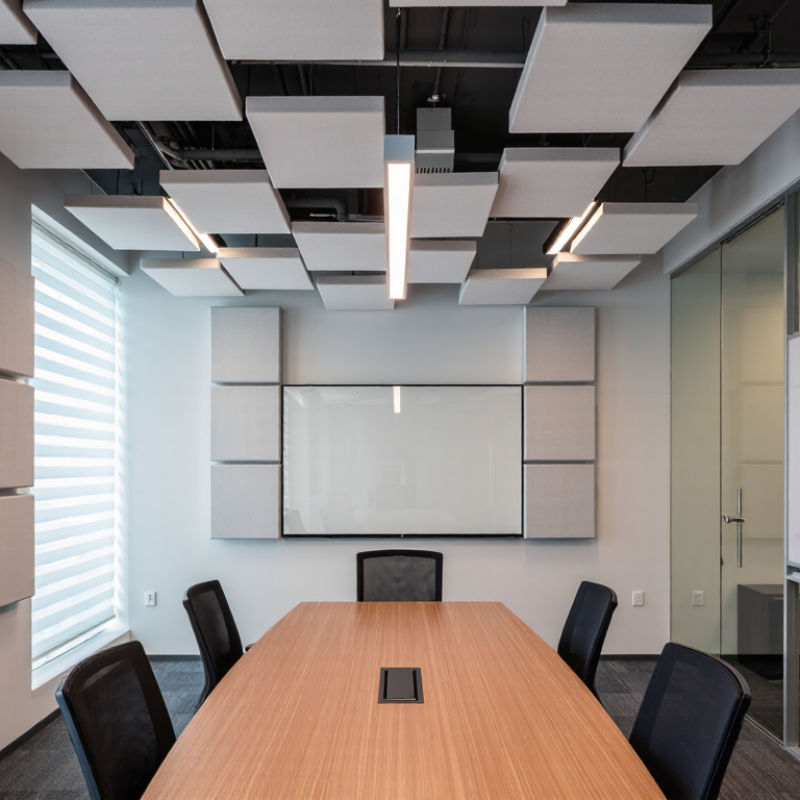
What Are Acoustic Absorption Panels?
Acoustic absorption panels are porous materials designed to reduce reflected sound inside a room. They are commonly made from fibrous insulation, foam, wood fiber, or similar sound-absorbing cores. Sound waves enter the panel instead of bouncing strongly from hard surfaces. This process lowers reverberation and improves speech clarity. The room may feel calmer. It may also sound less tiring.
These panels do not block sound passing through walls. That distinction matters. Soundproofing controls transmission between spaces, while absorption manages sound within one space. In practice, panels work best on walls or ceilings where echoes are noticeable. Strategic placement near microphones, speakers, or conversation areas can make a measurable difference. However, covering every surface is rarely necessary. Too much absorption can make a room feel unnaturally dull.
Panel performance depends on thickness, density, air gaps, and installation quality. A thin panel placed directly on a wall may absorb mid and high frequencies, but leave low tones uncontrolled. Adding an air space can improve absorption at certain frequencies. Room measurements are more reliable than guessing from appearance. A simple clap test helps identify obvious echoes, but it cannot replace professional acoustic testing. Even careful designs may need adjustment after furniture, lighting, and occupancy change.
How Do Acoustic Absorption Panels Work?
Acoustic absorption panels reduce reflected sound rather than simply blocking outside noise. Their porous surfaces contain tiny air spaces. When sound waves enter, air particles move through those spaces. Friction slows the movement and changes part of the sound energy into a very small amount of heat. The room then feels quieter and less harsh. I have noticed this difference in rooms where voices previously bounced from bare walls. Speech becomes easier to follow. The improvement can be immediate.
Panel thickness matters. A thin panel usually controls higher frequencies, such as clapping or sharp consonants. Bass is different. Thicker panels absorb lower frequencies more effectively, although bass often needs special treatment. An air gap behind the panel can improve absorption because sound has more space to lose energy. Placement matters. Wall panels near strong reflection points can reduce early echoes, while ceiling panels help control sound above desks and tables. Covering every surface is not automatically better. An overly damped room may feel unnatural, and some lively sound is useful.
Good installation starts with observation and measurement. Clap tests can reveal echoes, but they cannot replace calibrated acoustic measurements. Professionals may examine reverberation time, frequency response, and the room’s purpose before recommending treatment. A panel’s published rating is useful, but testing conditions do not perfectly match every room. That limitation deserves attention. Absorption also differs from soundproofing: panels improve internal acoustics, while construction changes are needed to block sound passing through walls. The best result usually combines thoughtful placement, suitable thickness, and realistic expectations.
What Acoustic Problems Can They Address?
Acoustic absorption panels are important because rooms can produce sound long after a person stops speaking. In a hard-surfaced office, a voice may bounce from glass, desks, and ceilings. These reflections overlap with new speech. The result is poor speech intelligibility, listening fatigue, and frequent requests to repeat.
Absorption panels target these problems by reducing reflected sound energy. Installed on walls or ceilings, they soften flutter echo between parallel surfaces. They can also lower reverberation time in meeting rooms, classrooms, studios, and restaurants. A simple test is useful: clap once and listen for a sharp tail. If the sound lingers, the room probably needs treatment. Panels placed near strong reflection points often improve clarity more efficiently than covering every surface.
However, panels are not a cure-all. They absorb selected frequencies, not every noise source. Low-frequency rumble from ventilation or traffic may require thicker treatment and additional controls. Poor placement can also leave a room strangely dull while speech remains unclear. I have seen plans focus on appearance before measuring the room, creating avoidable compromises. Panel performance should be checked against room size, surface materials, occupancy, and intended use. Good acoustic design is partly technical, but it also depends on how people actually use the space.
Where Are Acoustic Absorption Panels Commonly Used?
Acoustic absorption panels are commonly used wherever reflected sound makes speech unclear or work uncomfortable. In offices, they reduce echoes between desks, glass walls, and hard ceilings. Meeting rooms benefit from panels placed near speakers and microphones. This helps remote participants hear fewer reflections and repeated syllables.
Classrooms often use wall and ceiling panels to improve teacher instructions. In recording studios, panels control early reflections around microphones and listening positions. Home theaters use them beside seating areas and on rear walls. Restaurants, cafés, and fitness rooms also need treatment because conversation competes with music, dishes, and moving equipment. Healthcare spaces may use washable, fire-rated panels to create calmer waiting areas.
Placement matters more than simply adding more material. Panels should target strong reflection points, not cover every surface. Thick panels usually absorb lower frequencies better, while lighter panels handle mid and high frequencies. A professional acoustic assessment can identify problem areas through speech tests or sound measurements. However, panels do not block outside traffic or stop sound passing through walls. They do not solve everything. I have seen rooms become quieter but still feel harsh because the ceiling remained reflective. A balanced design considers room size, furniture, noise sources, maintenance, and the people using the space.
Why Are Acoustic Absorption Panels Important? - Where Are Acoustic Absorption Panels Commonly Used?
| Location |
Common Acoustic Challenge |
Typical Panel Placement |
Why Absorption Panels Help |
| Open-plan offices |
Speech and activity reflecting from hard walls and ceilings can make spaces sound busy. |
Ceilings, walls, and selected areas near meeting or collaboration zones. |
Can reduce reflected sound and reverberation, helping conversations sound clearer. Panels do not, by themselves, block sound traveling between rooms. |
| Classrooms and lecture rooms |
Long reverberation can make teachers and students harder to understand. |
Ceilings and wall areas, positioned to suit the room layout and surfaces. |
Reducing room reflections can improve speech intelligibility and listening comfort. |
| Restaurants and cafés |
Many simultaneous conversations can build up in reflective interiors. |
Ceilings and suitable wall sections, while keeping required surfaces accessible and cleanable. |
Can limit excessive reverberation and make conversation more comfortable for diners. |
| Recording and rehearsal rooms |
Uncontrolled reflections may color recorded speech or music. |
Walls and ceilings, arranged as part of a room-specific acoustic plan. |
Absorption helps control reflections. Balanced treatment is important; panels alone do not provide sound isolation or replace bass control where needed. |
| Healthcare and consultation rooms |
Reverberant rooms can make speech less clear and contribute to a noisy-feeling environment. |
Ceilings and walls using products suitable for the room’s hygiene and safety requirements. |
Can reduce reflected sound and support clearer communication; product selection should follow applicable building and infection-control requirements. |
| Home theaters and media rooms |
Reflections from bare surfaces can affect perceived dialogue clarity and sound quality. |
Selected wall and ceiling areas, planned around seating and loudspeaker positions. |
Can manage room reflections and improve listening comfort. Preventing sound from reaching other rooms requires suitable sound-isolation construction. |
| Gyms and multipurpose halls |
Large volumes and hard finishes often create lengthy reverberation. |
Ceilings and upper wall areas, with durable, appropriately rated products. |
Can reduce reverberation and make announcements and speech easier to follow, depending on room design and the amount of treatment. |
Note: Acoustic absorption panels reduce sound reflections within a space. Their effectiveness depends on factors such as panel material, thickness, coverage, placement, and room construction; they are not a substitute for soundproofing.
How Should Acoustic Absorption Panels Be Selected and Installed?
Why Are Acoustic Absorption Panels Important?
How Should Acoustic Absorption Panels Be Selected and Installed?
Selecting acoustic absorption panels starts with the room’s real problem. A meeting room with speech echo needs different treatment from a music studio with low-frequency buildup. I usually listen for flutter echoes, measure reverberation time, and inspect hard surfaces such as glass, concrete, and bare ceilings. A simple clap test helps, but it cannot replace proper acoustic measurement.
Panel thickness matters. Thin panels often control mid and high frequencies, while thicker products absorb a broader range. For speech areas, panels around 40 to 60 millimeters thick may work well. Leave an air gap behind them when possible. The gap improves absorption, especially at lower frequencies. Check the manufacturer’s test data, fire classification, humidity resistance, and cleaning requirements. Appearance matters too, because neglected panels rarely remain effective.
Installation should target strong reflection points near speakers, desks, and opposite walls. Place panels at ear height, then add ceiling treatment when voices still sound harsh. Do not cover every surface. Some natural reflection keeps a room lively. In my experience, uneven placement can outperform a crowded wall. That assumption can fail, though, when low frequencies dominate. Corners may then need thicker bass treatment, not more thin panels. Use secure fixings, maintain access to wiring, and avoid blocking sprinklers, lights, or ventilation. Small gaps can matter. Measure again after installation and adjust one section at a time.
Why Are Acoustic Absorption Panels Important?
Typical Noise Reduction Coefficient (NRC) values show how effectively common interior materials absorb sound.
Fiberglass and mineral wool panels generally provide higher broadband absorption than hard surfaces.
When selecting panels, consider the room’s reverberation, target frequency range, thickness, coverage area,
fire rating, and installation location. The values shown are representative NRC ratings; actual performance
varies by product construction, thickness, mounting method, and test conditions.
Conclusion
Acoustic Absorption Panels are materials designed to reduce unwanted sound reflections inside a room. By absorbing part of the sound energy that would otherwise bounce off hard surfaces, they can help limit echo and reverberation, making speech and other sounds clearer. They are useful in spaces where excessive reflections affect comfort, communication, or listening quality.
These panels can address common acoustic challenges in offices, classrooms, meeting rooms, studios, and other indoor settings. Choosing the right panels involves considering the room’s size, surfaces, intended use, and the types of sound that need control. Placement matters too: panels should be installed where they can effectively reduce reflections without obstructing the room’s normal use. Careful selection and thoughtful installation can create a more balanced, comfortable acoustic environment.

 Rich New Materials