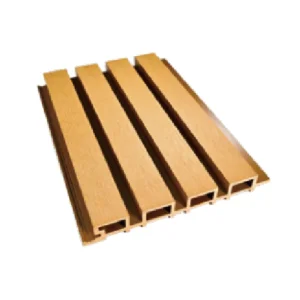
Direct factory supply featuring precision extruded WPC wall cladding, acoustic slat panels, and rigid core interior surfaces.
An authoritative analysis of material substitution, international environmental mandates, and structural demand growth across global commercial and residential construction sectors.
The global construction, architectural fit-out, and exterior cladding industries are undergoing a irreversible structural pivot. Driven by stringent deforestation prohibitions, escalating maintenance overheads of natural wood, and rigorous urban fire safety regulations, engineered composite materials—specifically Panneau WPC (Wood-Plastic Composite)—have established market dominance.
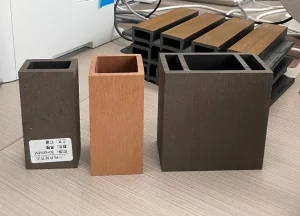
Historically, solid timber was prized for its organic tactile aesthetics. However, natural wood suffers from inherent structural vulnerabilities: high volumetric thermal expansion, susceptibility to rot, termite infestation, and moisture-induced warping. WPC technology synthesizes micro-milled hardwood fibers (60-65%) with thermoplastic polymers (30-35% recycled HDPE or PVC) and specialized coupling agents, creating a hydrophobic matrix that delivers natural timber aesthetics without structural degradation.
Strict environmental enforcement in western markets—notably the EU’s REACH (Registration, Evaluation, Authorisation and Restriction of Chemicals) regulations and North America’s LEED (Leadership in Energy and Environmental Design) rating framework—has accelerated the adoption of zero-formaldehyde WPC wall panels and decking systems.
Modern procurement frameworks penalize traditional building materials that off-gas volatile organic compounds (VOCs). Advanced Chinese WPC production lines utilize eco-friendly calcium-zinc stabilizers and bio-based foaming agents, replacing obsolete lead-based compounds. This structural compliance position makes Chinese WPC manufacturers indispensable strategic partners for global distributors and tier-1 EPC contractors.
Examining the supply chain capacity, automated extrusion technology, and rigorous quality control protocols of China's premier WPC production hub.
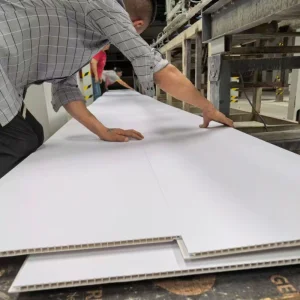
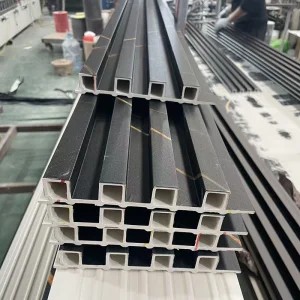
Equipped with state-of-the-art twin-screw co-extruders, multi-axis engraving platforms, and automated online film-lamination systems. Our plant ensures dimensional tolerance variations under ±0.15mm per profile length.
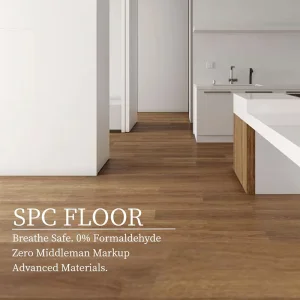
Beyond standard WPC wall panels, our infrastructure incorporates 4 SPC Flooring lines (3M m²/yr), 40 Outdoor WPC Decking lines (2M m²/yr), 12 UV Marble lines (6M m²/yr), and 6 specialized Carbon Fiber panel extrusion lines (1M m²/yr).
Every raw polymer and wood fiber batch undergoes spectrophotometer color matching, thermogravimetric analysis (TGA), boiling test water immersion, and QUV accelerated weathering tests exceeding 3,000 hours.
Empirical performance breakdown validating the superior engineering metrics of Wood-Plastic Composites in modern building applications.
| Performance Characteristic | High-Density Panneau WPC | Natural Hardwood Timber | Standard PVC Cladding | High-Pressure Laminate (HPL) |
|---|---|---|---|---|
| Density Range (g/cm³) | 0.95 – 1.45 | 0.60 – 0.85 | 0.45 – 0.70 | 1.35 – 1.45 |
| 24-Hour Water Absorption | < 0.5% (Hydrophobic) | 15.0% - 35.0% (Hygroscopic) | < 0.1% | < 1.5% |
| Fire Retardancy Rating | EN13501-1 Class B1-s1,d0 | Class B2 / B3 (Combustible) | Class B1 | Class B1 / B2 |
| Formaldehyde Emission | E0 / Non-Detectable (0.0mg/L) | Variable (Dependent on Sealant) | E0 | E1 / E0 |
| Termite & Biological Decay Resistance | 100% Immunity (Grade 10) | Vulnerable (Requires Chemical Treatment) | 100% Immunity | High Immunity |
| Expected Service Lifespan | 15 - 25+ Years Zero Maintenance | 5 - 8 Years (Needs Regular Oiling) | 8 - 12 Years (Color Fading Risk) | 10 - 15 Years |
From heavy-traffic commercial venues to luxury residential interiors, explore how specialized WPC profiles solve critical architectural challenges.
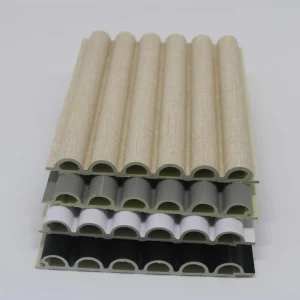
In luxury hotel lobbies, corporate headquarters, and retail spaces, indoor fluted WPC Grating and Semicircular Wall Panels deliver high visual depth while protecting wall substrates from heavy impact. Their scratch-resistant outer micro-cut films resist scuff marks and facilitate rapid modular installation without wet-plaster work.
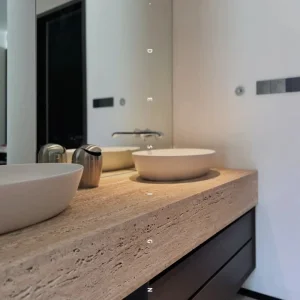
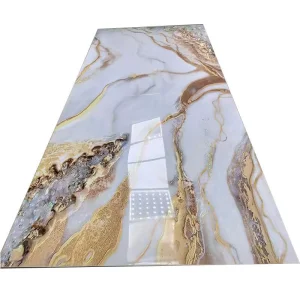
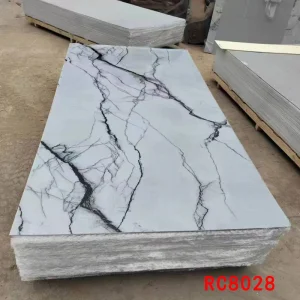
Bathrooms, spa wellness hubs, and underground commercial passages require materials that completely resist water vapor expansion. Waterproof Indoor WPC Cladding and UV Marble Sheets eliminate mold spore propagation, maintaining zero structural warping or delamination even under continuous 98% relative humidity exposure.
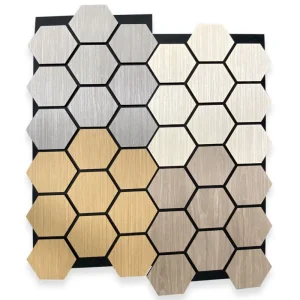
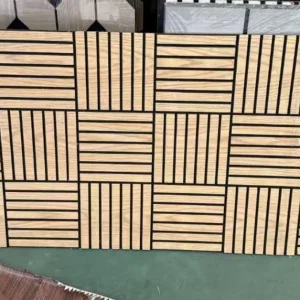
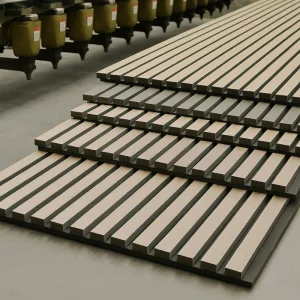
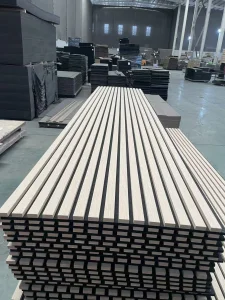
In modern open-plan offices, educational institutions, and recording environments, controlling reverberation time (RT60) is paramount. Acoustic Slat Wood WPC Panels lined with high-density recycled PET sound-absorbing felt achieve Noise Reduction Coefficients (NRC) up to 0.85, blending structural acoustic dampening with refined timber aesthetics.
Pioneering advancements reshaping the durability, realism, and environmental footprint of composite surface materials.
First-generation WPC profiles suffered from gradual color bleaching when exposed to intense UV solar radiation. China’s leading factories now utilize 3rd-Generation Co-Extrusion Tech, fusing an impenetrable 360-degree acrylic (ASA/PMMA) protective armor around the composite core during extrusion.
This dynamic shield layer protects against severe thermal stress, oil staining, and oxidative degradation, enabling outdoor cladding and decking products to maintain vibrant color integrity across extreme climate zones from Saudi Arabia's arid heat to Scandinavia's sub-zero freezes.
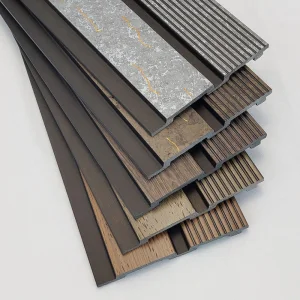
Innovations in material science have led to the creation of Bamboo Charcoal Wood Veneer Panels and carbon-fiber-reinforced polymer cores. Incorporating activated bamboo carbon particles enhances structural flexural strength while providing natural air purification properties by adsorbing residual ambient VOCs.
Simultaneously, carbon fiber additives lower overall profile mass by up to 20% while increasing tensile yield strength, drastically facilitating overhead ceiling installations and exterior curtain wall applications.
A practical compliance roadmap for international importers, building material distributors, and project procurement directors.
When auditing WPC factories in China, verify the ratio of virgin resin versus post-industrial recycled material. Premium grades maintain a strict 60% wood flour, 30% polymer, 10% chemical add ratio. Low-grade products overload calcium carbonate (chalk), leading to brittle profiles prone to snapping under thermal flexure.
Top-tier suppliers like Linyi Rich New Materials maintain in-house CNC mold-making departments with over 200 standard profile dies. For custom architectural projects, demand suppliers capable of delivering precision rapid-prototyping sample extrusion within 7 to 10 business days.
WPC profiles are high-density long freight items. Ensure your Chinese manufacturing partner utilizes reinforced corrugated corner protectors, moisture-vapor barrier plastic wrapping, and custom steel-strapped wooden pallets to maximize 40ft HQ container loading efficiency without surface abrasion.
Addressing technical inquiries regarding Panneau WPC manufacturing, physical parameters, custom OEM tooling, and global shipping logistics.
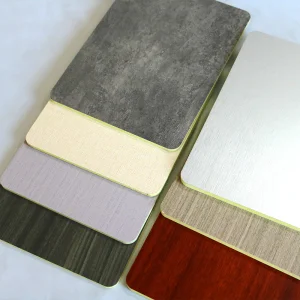
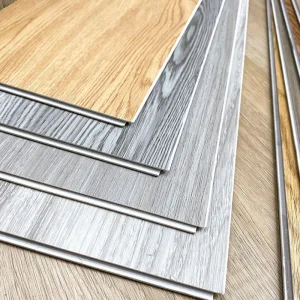
Explore our expanded eco-friendly product series: Acoustic wood panels, UV marble sheets, SPC rigid core flooring, and flexible stone veneers.
 Rich New Materials