Selected eco-friendly polymer composites certified for structural performance in South Asian climate dynamics.
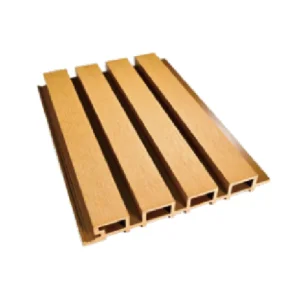
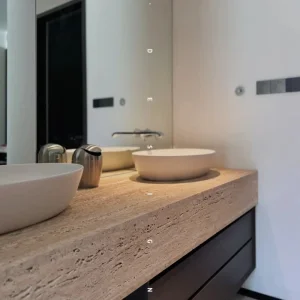
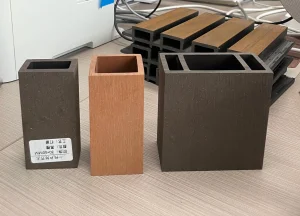
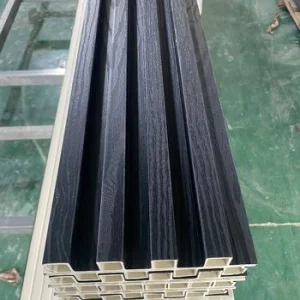
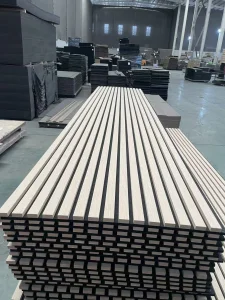
Linyi Rich New Materials Co., Ltd. is a modernized industrial enterprise integrating research and development, smart production, and global trade logistics. Dedicated to pioneering next-generation eco-friendly building materials, our manufacturing operations are anchored in Linyi City, Shandong Province. Spanning a state-of-the-art facility of over 100,000 square meters and powered by more than 300 skilled technical professionals, our factory maintains rigorous quality assurance protocols to support massive infrastructure projects across global markets, including direct supply chains serving Kathmandu, Lalitpur, and Pokhara in Nepal.
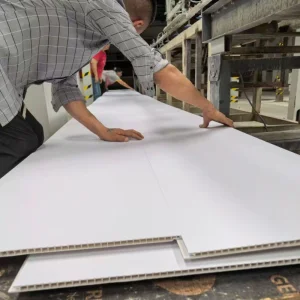
To supply high-volume commercial developments in Nepal with zero delivery bottlenecks, our factory maintains specialized production lines engineered for precision tolerances:
Understanding why traditional timber and gypsum ceilings fail in Kathmandu's microclimate, and how PVC/WPC polymer matrices deliver structural longevity.
Kathmandu experiences heavy annual rainfall (approx. 1,400mm) concentrated during the summer monsoon. Traditional plaster of Paris (PoP) and wood ceiling boards absorb atmospheric humidity, leading to warping, fungal bloom, and sag. PVC ceiling panels feature zero water absorption (<0.01%), eliminating mold growth and maintaining structural integrity throughout the wet season.
Situated in Seismic Zone V, building design in Kathmandu prioritizes dead-load reduction to enhance earthquake resilience. Weighing less than 2.8 kg/m², hollow-core PVC ceilings reduce structural ceiling mass by up to 65% compared to wet plasterboard systems, vastly increasing overhead safety during seismic events.
At 1,400 meters elevation, Kathmandu receives intense UV radiation and dramatic diurnal temperature shifts. Our UV-stabilized PVC ceiling formulations incorporate titanium dioxide (TiO2) and primary light stabilizers to prevent color degradation, surface chalking, or thermal brittleness over decades of exposure.
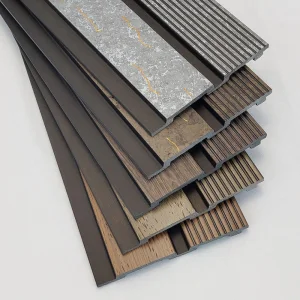
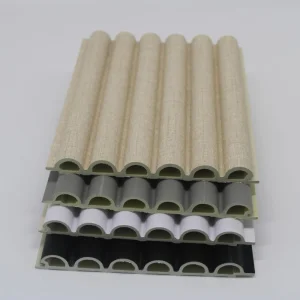
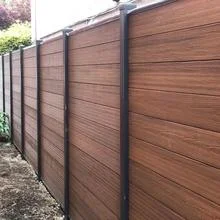
The urban landscape of Kathmandu Valley—expanding rapidly across Thamel's commercial hubs, Jhamsikhel’s modern hospitality avenues, and Nagarkot's hill resort developments—is seeing a major shift toward co-extruded Wood-Plastic Composite (WPC) materials. Architects and structural contractors are replacing high-maintenance natural timber (such as Sal or Teak) with engineered outdoor WPC decking and facade cladding systems.
| Performance Parameter | Linyi Rich Co-Extruded WPC | Traditional Sal / Hardwood | Standard Gypsum Board |
|---|---|---|---|
| Moisture Absorption Rate | < 0.5% (Impermeable) | 18% - 25% (Swell Prone) | High (Structural degradation) |
| Seismic Dead Load Weight | Lightweight (2.5 - 4.5 kg/m²) | Heavy (15 - 22 kg/m²) | Moderate (9 - 12 kg/m²) |
| Termite & Insect Resistance | 100% Resistant (Polymer Matrix) | Vulnerable without treatment | Vulnerable paper backing |
| Fire Reaction Rating | Class B1 (Self-Extinguishing) | Class B3 (Combustible) | Class A (Non-combustible face) |
| Maintenance Cycle | Zero paint/varnish needed | Annual sealing required | Frequent repainting needed |
Our comprehensive building material pipeline directly targets Kathmandu's architectural pain points:
Importing building materials into Nepal requires precise cross-border supply chain management. Linyi Rich New Materials has perfected shipping routes directly to Kathmandu, ensuring project timelines are met without regional warehousing delays.
Shipments depart Qingdao or Lianyungang ports to Kolkata Port (India) or dry ports via sea-rail intermodal routes, reaching the Birgunj Integrated Check Post (ICP) or Chobhar Dry Port in Kathmandu smoothly.
Panels are packed in reinforced, moisture-barrier multi-layer cartons with edge guards and plastic palletizing to endure rough transit over mountain highways without corner damage.
Products come with complete ISO9001, CE, and SGS lab test certificates, enabling seamless customs clearance and approval by government infrastructure inspectors in Nepal.
As the construction industry transitions toward zero-carbon emissions and circular economy metrics, Linyi Rich New Materials is leading innovation in polymer composite manufacturing:
We are integrating bio-derived PVC resins and recycled agricultural husks to manufacture 100% recyclable, zero-VOC indoor wall and ceiling panels tailored for green building certifications (LEED/GRIHA) in South Asia.
Next-generation exterior WPC wall cladding will feature hydrophobic nano-coatings that prevent urban dust accumulation—a critical benefit in Kathmandu's dry winter season—allowing rain to wash away surface dust automatically.
Combining high-density acoustic foam with micro-perforated PVC ceilings to offer combined thermal insulation and sound attenuation (STC > 45dB) for urban spaces near busy Kathmandu thoroughfares.
Factory-direct structural materials engineered for high performance in Kathmandu's architectural climate.
Expert technical insights for Kathmandu developers, architectural engineers, and procurement managers.
Get factory-direct B2B pricing, engineering specification sheets, and physical material sample kits dispatched directly to your office in Kathmandu.
Send Inquiry Now Rich New Materials