Explore our core industrial solutions manufactured under strict quality standards for global architectural compliance.
Setting the Global Standard in Eco-Friendly Composite Material Manufacturing & R&D
Linyi Rich New Materials Co., Ltd. stands as a premier modernized enterprise operating at the intersection of high-precision chemical engineering, architectural material science, and global supply chain logistics. Headquartered in the industrial hub of Linyi City, Shandong Province, our company operates an intelligent production base spanning 100,000 square meters.
With a dedicated technical workforce exceeding 300 senior engineers, material scientists, and QA specialists, we pioneer zero-formaldehyde, ultra-durable Wood-Plastic Composites (WPC), Stone-Plastic Composites (SPC), and advanced acoustic wall systems. Our integrated business model guarantees end-to-end quality control—from raw polymer compounding to high-pressure extrusion and customized surface texturing.
E-E-A-T Assurance: Certified under ISO9001, ISO14001, CE, and ASTM international compliance frameworks. Over 100 countries rely on our engineered solutions for tier-1 commercial developments and sustainable residential projects.
Understanding the shift toward bio-composite materials, decarbonization mandates, and high-performance architectural polymers.
Global building codes (such as EU Green Deal and LEED v4.1 certification requirements) are driving rapid substitution of traditional timber and virgin plastics with circular wood-plastic composites. Advanced WPC boards combine up to 60% recycled hardwood fibers with eco-friendly polyolefins, slashing carbon footprints by up to 45% compared to natural timber logging and processing.
First-generation WPC faced challenges with UV degradation, moisture absorption, and surface staining. The global industry baseline has now shifted toward 360-degree co-extrusion technology. By encapsulating the dense core with an outer fluorocarbon-modified polymeric shield, exterior WPC wall panels achieve superior resistance against fading, mold growth, and thermal warpage under extreme climate shifts.
Safety mandates in multi-family residential and high-traffic commercial buildings require stringent fire performance. Modern custom WPC boards integrate synergistic flame retardant additives (such as aluminum trihydroxide and magnesium hydroxide), allowing high-end WPC panels to achieve EN 13501-1 B-s1, d0 fire rating and ASTM E84 Class A certification without releasing toxic halide vapors.
A rigorous comparative analysis of physical, chemical, and structural performance metrics across key material lines.
| Performance Parameter | Standard Interior WPC Board | Co-Extruded Exterior WPC Decking | Rigid Core SPC Board | Bamboo Charcoal Veneer |
|---|---|---|---|---|
| Base Density (g/cm³) | 0.95 - 1.05 | 1.30 - 1.40 | 1.95 - 2.10 | 0.85 - 0.95 |
| Water Absorption (24h immersion) | ≤ 0.5% | ≤ 0.1% (Zero swelling) | 0.00% (100% Waterproof) | ≤ 0.3% |
| Flexural Strength (MPa) | ≥ 28.5 | ≥ 40.0 | ≥ 35.0 | ≥ 25.0 |
| Formaldehyde Emission Level | E0 Grade (≤ 0.05 mg/m³) | EN 717-1 Neutral | Non-detectable / Zero formaldehyde | ENF Grade (≤ 0.025 mg/m³) |
| Fire Reaction Rating | B1-Class (GB 8624) | B-s1, d0 (EN 13501-1) | B1-Class / Class A (ASTM E84) | B1 Flame Retardant Core |
| Thermal Expansion Coeff. | ≤ 35 x 10⁻⁶ / K | ≤ 25 x 10⁻⁶ / K | ≤ 15 x 10⁻⁶ / K | ≤ 30 x 10⁻⁶ / K |
Our vertically integrated facility powers 8 distinct product lines engineered for specialized architecture and interior design projects.
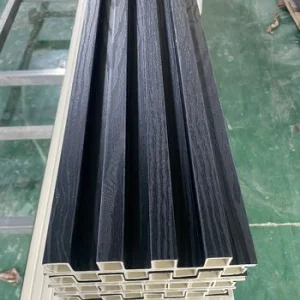
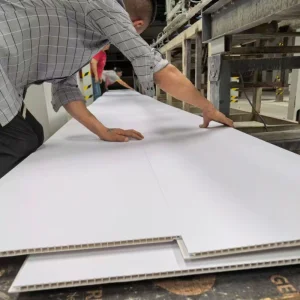
Operating 120 fully automated production lines with an annual output exceeding 12 million square meters. Designed for rapid modular installation, offering authentic timber textures combined with structural anti-warping properties.
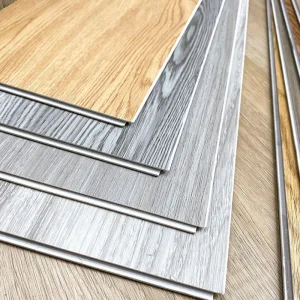
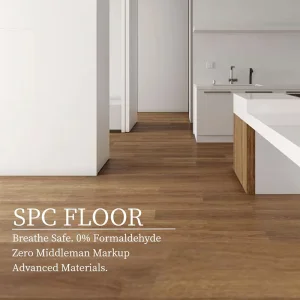
Powered by 4 high-precision extrusion lines with an annual capacity of 3 million square meters. Incorporates ultra-dense stone-plastic formulation, IXPE sound-dampening underlayment, and UV wear layers for heavy commercial foot traffic.
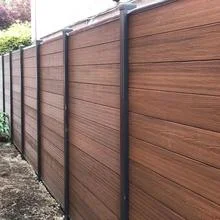
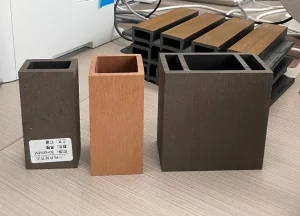
Utilizing 40 customized heavy-duty production lines producing 2 million square meters per year. Tailored for extreme thermal variations (-40°C to +60°C) with anti-microbial and anti-UV stabilization.
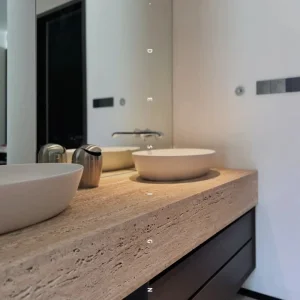
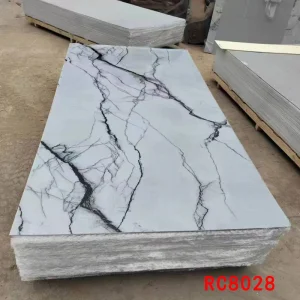
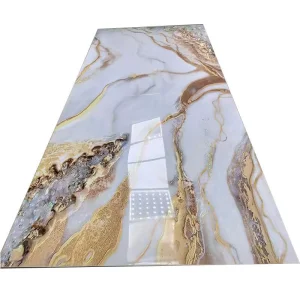
Equipped with 12 specialized lines in cleanroom UV workshops yielding 6 million square meters annually. Delivers mirror-finish high-gloss stone visual effects at a fraction of natural marble weight and cost.
Driven by 6 specialized production lines producing 1 million square meters yearly. Features high tensile strength, structural flexibility, and precision CNC grooving capability for zero-gap corner bending.
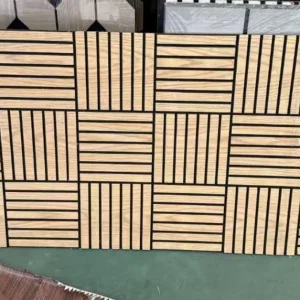
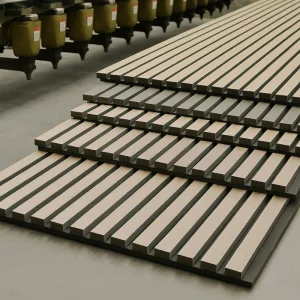
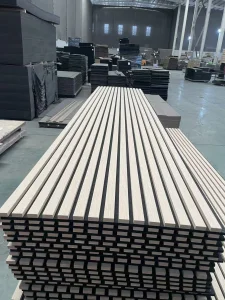
Features end-to-end automated slitting and assembly machinery. Combines sound-absorbing recycled PET felt backings with custom WPC or wood veneer slats to reduce reverberation (NRC rating up to 0.85).
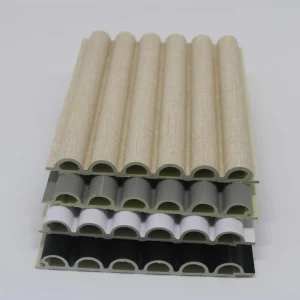
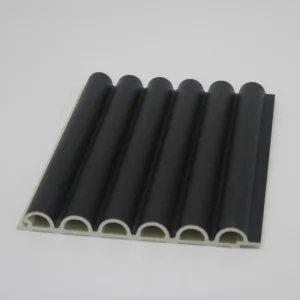
Supported by 6 advanced extrusion units and over 200 custom precision molds. Lightweight, water-resistant, and ideal for intricate decorative interior moldings and residential feature walls.
Integrates micro-porous bamboo charcoal technology within the co-extruded core. Provides natural humidity regulation, odor absorption, and enhanced structural elasticity for bendable architectural curves.
How Linyi Rich New Materials Co., Ltd. empowers international wholesalers, architectural firms, and commercial developers.
We accommodate precise custom requests ranging from proprietary extrusion cross-section tooling to spectrophotometric color matching. Our tooling shop can manufacture new molds within 15 days, allowing developers to execute unique architectural signatures.
Every batch undergoes automated optical sorting and destructive laboratory testing before dispatch. Our quality assurance protocols verify flexural modulus, drop-weight impact resistance, boiling water immersion stability, and VOC emissions.
Exporting across North America, Europe, the Middle East, and Southeast Asia requires thorough regulatory mastery. We provide comprehensive documentation packages including REACH, RoHS, CE declaration of performance, and fumigation-free palletization.
Pioneering next-generation smart surfaces, bio-resins, and AI-driven manufacturing precision.
We are integrating IoT sensor arrays and machine-learning feedback loops into our 120 WPC lines. Real-time melt temperature monitoring and thickness auto-adjustment ensure dimensional tolerances within ±0.15mm, eliminating batch variation.
Transitioning toward bio-polyethylene derived from agricultural waste streams. This innovation aims to reduce petroleum-derived binder content by 40% while preserving mechanical shear strength and flexural resilience.
Integrating superhydrophobic TiO2 nanocomposite coatings onto exterior WPC facade panels. Photocatalytic action breaks down organic atmospheric pollutants, allowing rainwater to clean exterior walls effortlessly.
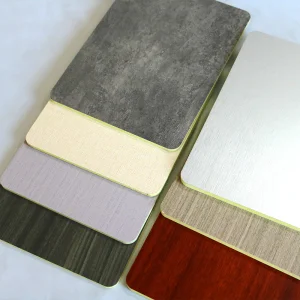
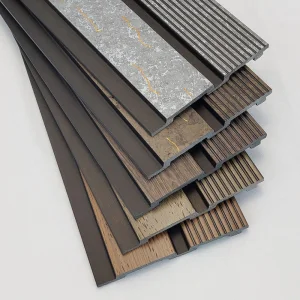
Discover our full range of specialty materials engineered for commercial and high-end residential applications.
Direct technical guidance for OEM buyers, distributors, and engineering specifiers.
Our co-extruded outdoor WPC panels are engineered for a minimum design service life of 25 to 30 years under normal environmental conditions. The 360-degree outer polymer shield contains specialized UV stabilizers and anti-oxidants that prevent structural embrittlement, color fading (Delta E < 3 over 5 years), and rot caused by fungi or insect infestation.
We incorporate non-toxic, halogen-free mineral flame retardants directly into the resin compound formulation. Our interior WPC wall panels and SPC flooring achieve EN 13501-1 Class B-s1, d0 and GB 8624 B1-level certification. Detailed laboratory test reports from accredited third-party facilities (SGS/TÜV) are provided with every engineering submittal package.
For standard catalog items, our Minimum Order Quantity (MOQ) starts at 500 square meters per color/profile. For fully custom extrusion dies or unique surface film laminations, the typical tooling lead time is 10 to 15 days, with full-scale production batches dispatched within 20 to 25 days post-sample approval.
Yes. All our interior panels achieve E0 and ENF indoor air emission standards, with non-detectable formaldehyde emissions. Furthermore, the non-porous nature of our surface films prevents bacterial accumulation, making them resistant to common hospital-grade surface disinfectants.
 Rich New Materials